
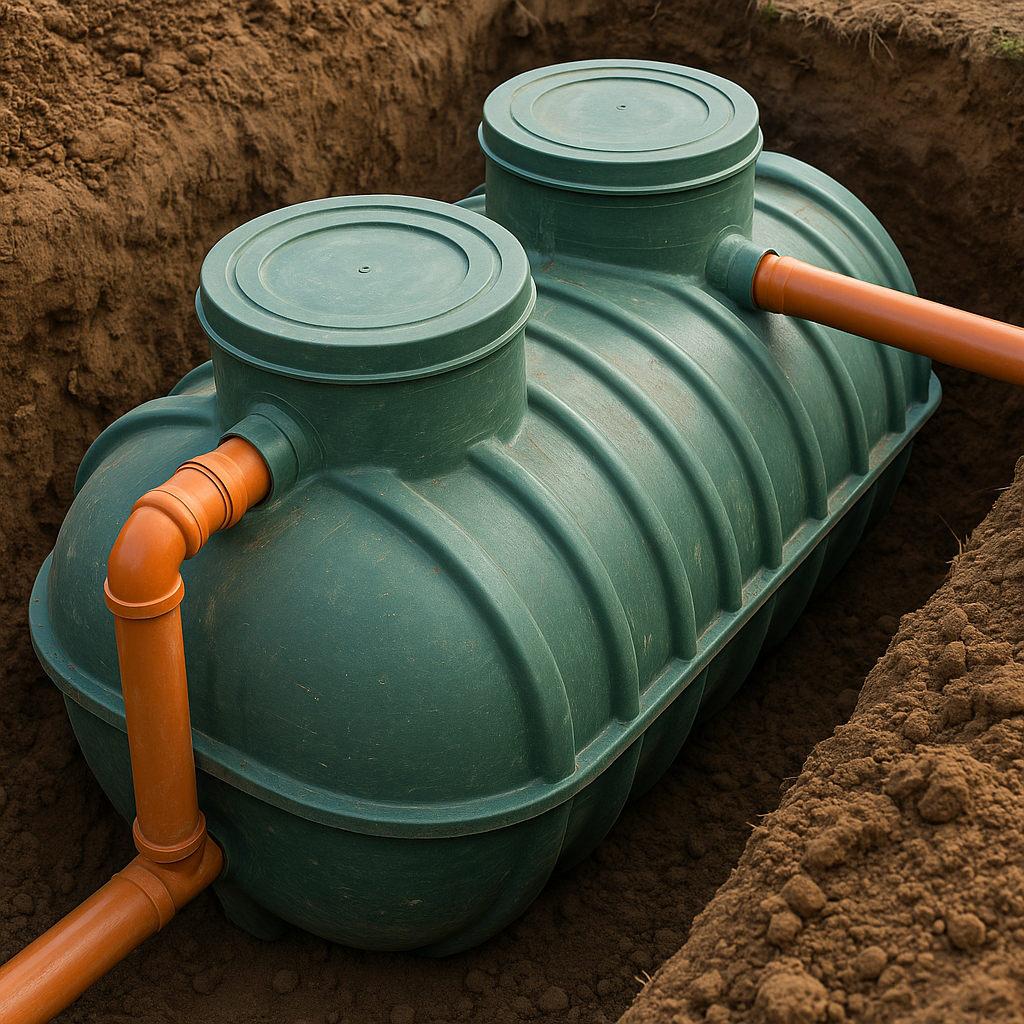
For properties in rural parts of the Isle of Man, a private sewage system is an essential part of everyday life. Whether you own a home, holiday cottage, B&B or small business, understanding your system can help prevent breakdowns, protect the surrounding environment and avoid costly repairs.
This guide explains how septic tanks work, the maintenance they need and the local requirements to consider when installing or replacing a system.
What Is a Septic Tank?
A septic tank provides the first stage of treatment for wastewater from toilets, kitchens and bathrooms at properties without a mains sewer connection.
Usually buried underground, the tank separates solids from liquids. Sludge settles at the bottom, while oils and lighter materials form a layer at the surface. Natural bacteria help break down some of the waste.
The remaining liquid, known as effluent, still requires further treatment. In a suitable system, this takes place in a correctly designed drainage field, where the soil provides additional treatment.
Which Properties Need a Private Sewage System?
Off-mains sewage systems may serve:
- Rural homes and isolated cottages.
- Farms and associated residential properties.
- Holiday accommodation and B&Bs.
- Small business premises without access to a public sewer.
A septic tank is one option, but some properties need a package sewage treatment plant or another arrangement. The right choice depends on the site, wastewater volume, ground conditions and available discharge route.
How Does a Septic Tank Work?
- Wastewater enters the tank through the property’s foul drainage pipes.
- Solids and liquids separate, with sludge settling and scum collecting at the surface.
- Partially treated effluent leaves the tank for further treatment through a suitable drainage field.
- Accumulated sludge is removed periodically to maintain capacity and protect the drainage system.
The tank and drainage field work together. Emptying the tank alone will not resolve every problem, particularly if the drainage field has become blocked or waterlogged.
Septic Tank Maintenance: What You Need to Know
Regular maintenance helps your system operate effectively and reduces the risk of pollution.
Arrange Emptying at Suitable Intervals
The frequency depends on the tank’s size, usage and performance. Follow professional advice for your installation rather than assuming the same interval suits every property.
Manx Utilities provides a septic tank emptying service on request. Emptying and mechanical servicing are separate tasks, so a system with pumps or treatment equipment may also need an engineer’s inspection.
Be Careful What Goes Down the Drain
Only flush human waste and toilet paper. Keep wipes, sanitary products, fats, oils and grease out of the system. Use cleaning products in moderation, particularly bleach and disinfectants, which can disrupt the bacteria involved in treatment. Rainwater drainage should remain separate from the septic tank.
Watch for Warning Signs
Seek advice if you notice:
- Persistent sewage smells.
- Slow-draining toilets or sinks.
- Wastewater backing up into the property.
- Unusually wet ground around the drainage field.
- Pump alarms or changes in pump operation.
Never enter a septic tank. Dangerous gases can accumulate inside, even when the tank appears empty.
Septic Tank or Sewage Treatment Plant?
A septic tank provides settlement and partial biological treatment. Its effluent needs further treatment before it can be safely dispersed.
A sewage treatment plant adds further treatment stages, commonly using aeration or other biological processes to improve effluent quality. It usually requires electrical power and regular servicing.
Neither system is suitable for every site. A treatment plant does not automatically make a proposed discharge acceptable: the receiving environment and local approval requirements still matter.
Septic Tank Requirements on the Isle of Man
The Isle of Man has its own legislation and approval processes. England’s Environment Agency general binding rules should not be used as the compliance framework for a Manx property.
Discharge Licences
The Department of Environment, Food and Agriculture, known as DEFA, regulates discharges to controlled waters.
Government guidance states that new discharges to controlled waters require an application and specific conditions. It does not permit new septic tank effluent discharges to controlled waters, allowing discharges from private sewage treatment works instead. Historic arrangements may have existing licences, so an older system’s position should be checked individually.
Planning and Building Control
Before installing, replacing or altering a system, check the planning and building control requirements for the proposed work. These are separate approval processes.
Manx building regulations prioritise connection to a public sewer where reasonably practicable. They also require private systems to have suitable capacity, maintenance access and protection against contamination of watercourses, groundwater and water supplies.
Choosing a System for Your Property
A proper assessment should consider:
- Capacity: Occupancy, business activity and seasonal peaks.
- Ground conditions: Soil suitability, groundwater levels and percolation testing where needed.
- Discharge route: Where the effluent will go and what approvals apply.
- Maintenance access: Safe access for inspections, servicing and emptying.
- Nearby water supplies: Protection of wells, springs and boreholes.
- Operating requirements: Power, alarms and ongoing servicing costs.
For holiday accommodation or small businesses, changing visitor numbers and periods of low use should also form part of the assessment.
Septic Tank and Sewage System Advice from Robert Fox & Sons
Robert Fox & Sons helps homeowners and businesses across the Isle of Man with private sewage systems, including installation, servicing and repairs.
Whether you are replacing an ageing septic tank, considering a sewage treatment plant or investigating smells and drainage problems, our family-run team can assess your system and explain the practical options.
Call: 07577 258113
Email: hello@robert-fox.im
Enquire online: Contact Robert Fox & Sons